Author: sw_admin

  • Before You Donate: 7 Things to Check in Any Welfare Trust or Non-Profit Organization

    Before You Donate: 7 Things to Check in Any Welfare Trust or Non-Profit Organization

    Donating to charity to support society is an extremely rewarding act that anyone can do. No matter what type of charity you choose to donate to, the positive effect that your donation will have on an individual’s life can be very dramatic. The value of helping children, providing medical care, disaster relief, education and many other ways has greatly increased due to the rapid growth of online fundraising, social media fundraising campaigns, and the large number of charitable organizations in India. Many prospective charities are unsure that their donations will actually reach the needy due to the reasons outlined above. Another reason why many prospective donors are unwilling to donate to a charity is because they do not trust the organization to which they plan to donate. As such, it is very important for potential donors to confirm that the welfare trust or charity is a legitimate organization prior to donating their hard-earned money to them. Invest a few minutes to confirm that you are donating to a welfare trust, and you will guarantee that your donation will be used to help those people who are truly most in need and not be exploited by any fraudulent charity.

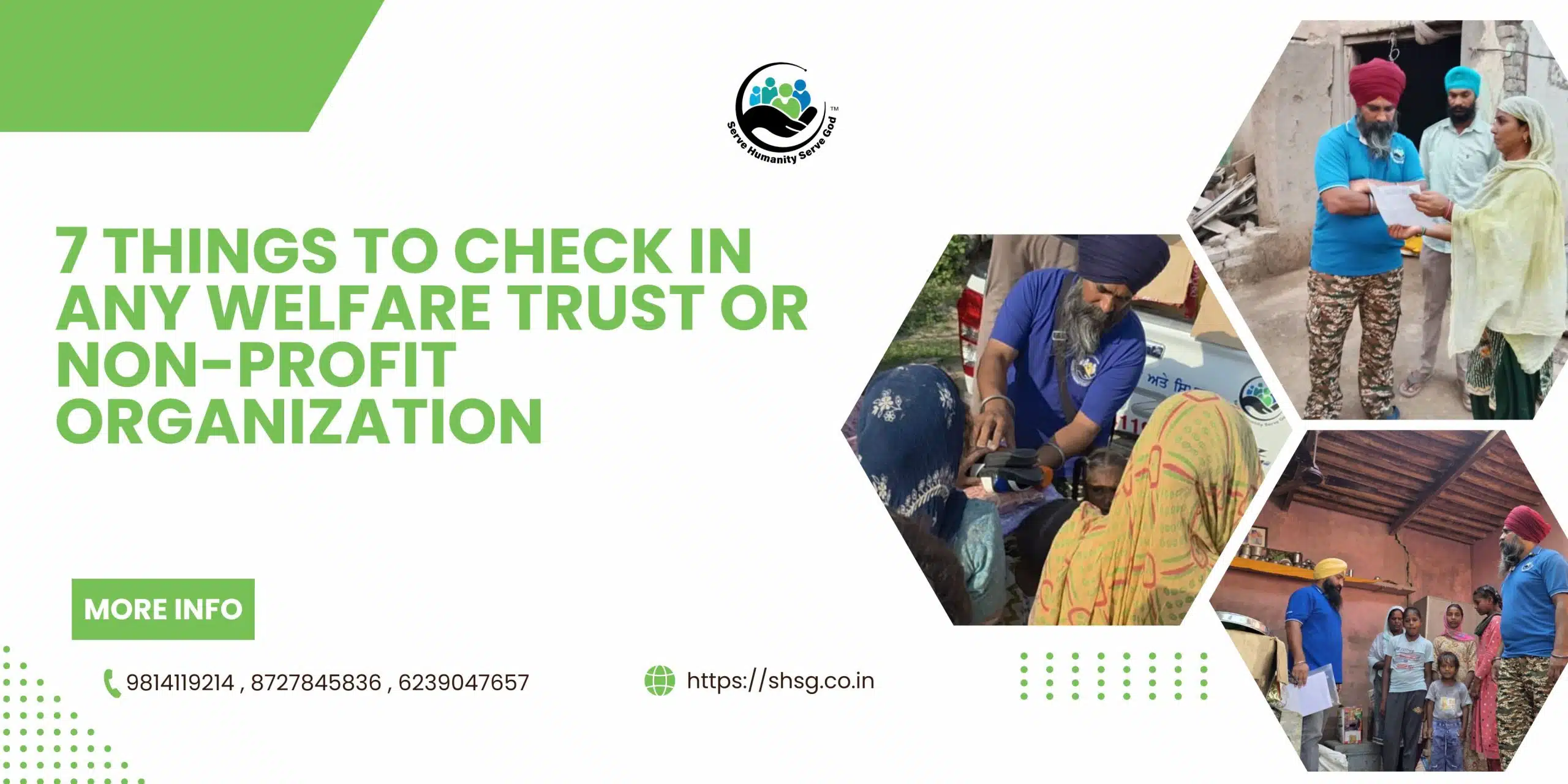
    There are seven major items worth checking into when deciding if you want to give a donation to a welfare trust or NGO or non-profit organization.

    1. Verify That the Trust Is Genuine and Registered

    The first requirement is to make sure that a not-for-profit organization (NFP) is correctly registered. Every valid charitable organisation will have documented evidence of their registration with the appropriate regulatory body, along with all the necessary legally required documents. By verifying the registration of a charitable organisation, it will provide assurance to you that the organisation is being properly registered and that it operates in a transparent manner, consistent with federal legislation.

    2. Check Their Past Work and Real Social Impact

    Another way of evaluating a charity is to review their history of charitable works. Reputable NFPs will commonly publish on their websites or use a publication to advertise and demonstrate the charitable works they have accomplished in the past. Reviewing the calendar of events and documented successes can give you an idea of how much experience the charity has had over a period of time. Examples of how to evaluate a charity’s past success include:

    • Documented success stories
    • Authentic images and videos from the various events
    • Documented humanitarian aid efforts (for example: Flood Relief, Pandemic Relief, etc.)
    • Documented evidence of corresponding activity related to events (via Social Media posts)
    • Testimonials from both beneficiaries and Volunteers
    • Documented projects

    If the charity has only used stock photographs, does not provide sufficient information about its programmes and/or projects, and provides limited evidence of past accomplishments, it is best to not donate to this charity. A legitimate Welfare Trust will always be able to provide complete and accurate documentation of its past successes, along with an abundance of stories demonstrating the impact of their efforts.

    3. Check Their Transparency With Funds

    Also, check how transparent they are with the way they receive their donations. Transparency is one of the major indicators of a welfare trust that is reputable and therefore worthy of your trust. When you can trust a welfare trust, it will be totally open and honest about:

    a) how donations are allocated,

    b) The amount of the donation that will go toward general overhead costs,

    c) The amount of the donation that will be used for the specific purpose of the charitable organization,

    d) Annual Budget/Financial Statements

    e) Detailed project reports

    Most charities will publish an annual report detailing how they spent the donation and where the donation was used, which helps ensure you know exactly where your donation goes. Therefore, if an NGO is unwilling to release its financial records and/or is unwilling to answer questions about how it spends the funds they raise you cannot trust it. You should always have a good understanding of how your contributions will help someone in need.

    4. Review Their Online Presence and Reputation

    Also, review the digital presence of the organization to evaluate its credibility. A legitimate welfare trust will have a robust digital presence.

    Ultimate Checklist

    a) Official website: Updated with current information and is detailed.

    b) Social Media Accounts (Facebook, Twitter, etc.): Will have posts about events, including photos.

    c) Google Reviews (Comments) from authentic donors.

    d) News articles published based on the work of the organization.

    You can also research the name of the welfare trust along with the words “scam,” “fake,” “reviews,” or “experience” to see if there are any reported complaints against them. An ethical welfare trust and a solid reputation online instills confidence in potential donors.

    5. Confirm Contact Information and Physical Address

    A genuine charity in India has verified and valid contact details made publicly accessible via the internet, such as;

    • The actual physical address of the charity’s main place of business.

    • A functioning phone number.

    • An official email account.

    • A designated individual or group of individuals responsible for managing the organization.

    Whenever feasible, contact the charity by telephone or email. A genuine charity will generally respond promptly and professionally to any inquiry submitted to them. A “fake” NGO may give you either an approximate address or out-of-order phone number(s). Visit their location whenever possible to confirm the validity of the organization.

    6. Understand Their Mission and Target Beneficiaries

    Before donating to an organisation, it is essential that you understand its mission (the purpose of the organisation), beneficiaries and value alignment with yourself. Donating to an organisation that aligns with your values is one of the most powerful ways to help the organisation and will also allow you to experience the positive impact of your donation.

    The organisation’s future goals and plans for achieving those goals must also be clear. Additionally, you should understand what types of relief or welfare are provided by the organization. Various types of relief or welfare can include, but are not limited to, education, health care and disaster relief assistance.

    A clear organizational mission demonstrates professionalism and shows that the organization is serious about fulfilling its objectives, which allows donors to know how their donations will support that objective in the long term. When you donate to a non-profit or charity, make sure that you have received proper documentation regarding the donation, as follows:

    * A verified donation receipt.

    * An acknowledgement of your payment to the organization.

    * Information regarding the 80G tax exemption (if applicable).

    * A confirmation via email or text of your donation.

    * A clear understanding of how your donation will be applied or used.

    The donation receipts serve two purposes: they are necessary for your taxes, and they are evidence that the organisation is accountable for its actions.

    7. Confirm Their Long-Term Commitment to the Cause

    Reliable NGOs don’t just appear during emergencies—they work consistently before, during, and after crises.

    Why Verify Before You Donate To A Charity – The Value Of Verification

    When we donate or support an organization/cause, it is showing our generosity towards that organization, but when we donate responsibly, we make our generosity have the greatest impact (real change).

    • These actions will allow us to: Reduce the potential of being a victim of scams
    • Support legitimate charities in India
    • Ensure that funds donated will be spent on helping those most in need
    • Be part of long-term sustainable positive change
    • Be confident that our contributions are making a positive difference in someone’s life.

    Through donating responsibly, we are helping to empower charitable trusts (NGOs) that sincerely care for, assist, promote and create social welfare and empower community development.

    Conclusion

    Donating can be a great statement; it may be a life changer for an individual and provides a foundation for developing a better community for those in need. If we do not do the appropriate verifying, our generosity can be misused.

    By taking the time to verify the charity’s status, transparency and reputation, as well as their mission and requested documentation, we are assuring ourselves that we support a legitimate, trustworthy charitable organization (welfare trust) that truly deserves our support.

    A single donation can positively impact the life of an individual regardless of the amount, making certain it goes to the right place where it is needed.
  • Continuing Seva for Punjab Flood Victims 2025: Extending a Helping Hand with Support from Jet Singh Trust and Sahaita USA

    Continuing Seva for Punjab Flood Victims 2025: Extending a Helping Hand with Support from Jet Singh Trust and Sahaita USA

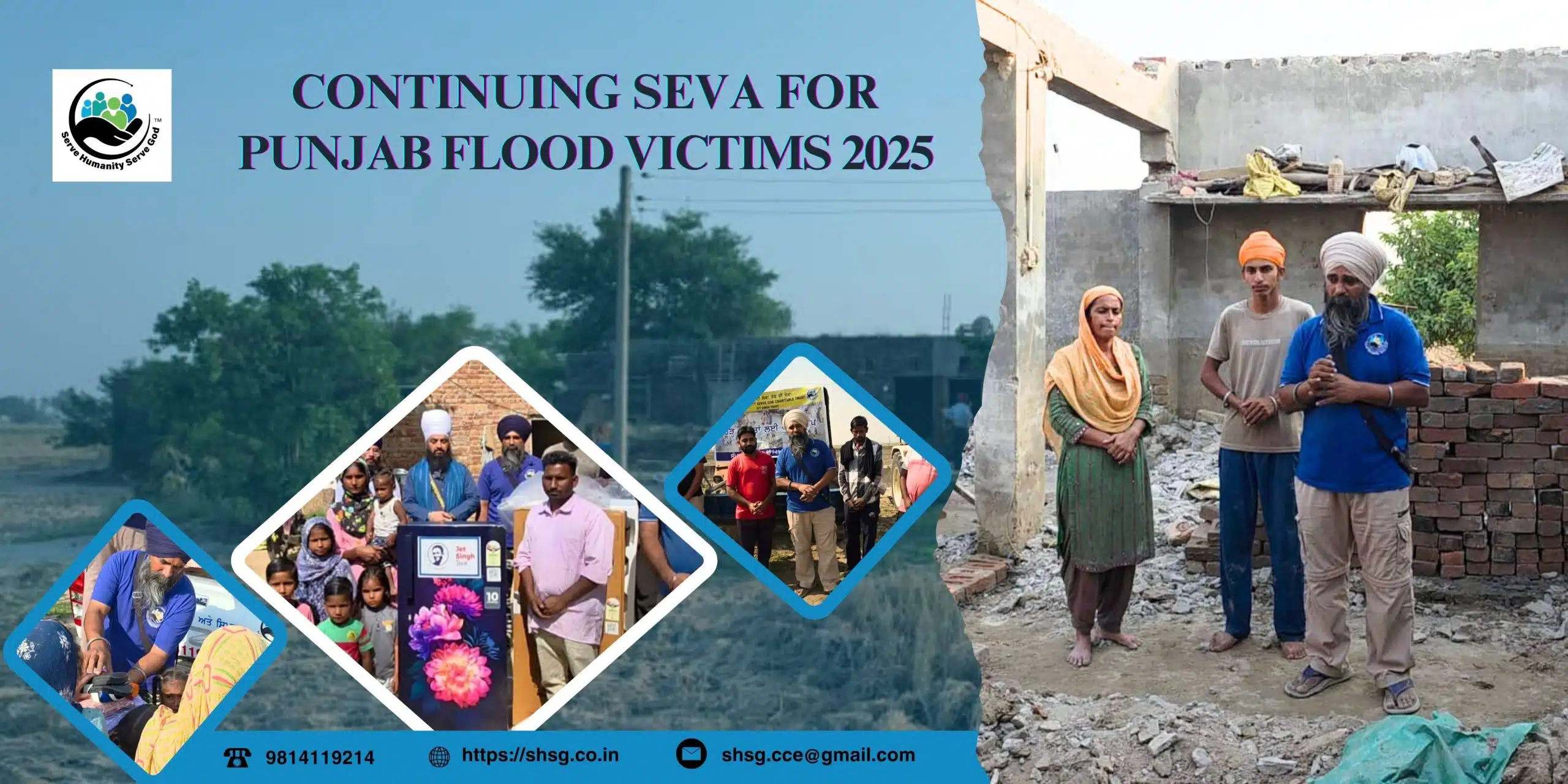
    In 2025, the province of Punjab experienced extensive flooding that threatened to take away the homes, livestock and livelihoods of many families. Despite this devastation, the Serve Humanity Serve God (SHSG) Charitable Trust has committed to continuing its path of seva – selfless service – to provide disaster relief and help restore hope for communities affected by flooding, to serve humanity and serve God.

    Rebuilding Lives, One Home at a Time. 

    Since the flood, SHSG’s ground teams have been working hard and steadfast in the most affected areas, such as Firozpur and supporting villages, where water reached between 8–10 feet. The Trust has initiated large multi-home reconstruction efforts for families who no longer had a home or home but in the worst situation to return in order to prevent end users from still being displaced and frequently living in temporary shelters.

    With support from the Sangat (community), Jet Singh Trust, Sahaita (USA), and many generous individuals, SHSG seva continues in flood-affected areas of Punjab.
    Due to support from Sahaita (USA), SHSG is building the 17th new home, representing a signal of shelter, hope, and stabilization for families who have lost everything. Each new home is a family that can stabilize, regain dignity, and once again feel hope after months of challenges.

    Supporting Livelihoods: Donating Cows to Affected Families

    For the families who lost their livestock, which is most often their only source of income, SHSG extended seva by donating cows to help them rebuild their livelihood. With the generous and trusted partnership of the Jet Singh Trust, these cow donations were possible and significantly enhanced SHSG’s impact on the ground.

    Through this, many farmers are producing milk again, earning income and supporting their families—turning despair back to self-reliance.

    Extending Seva Beyond Shelter

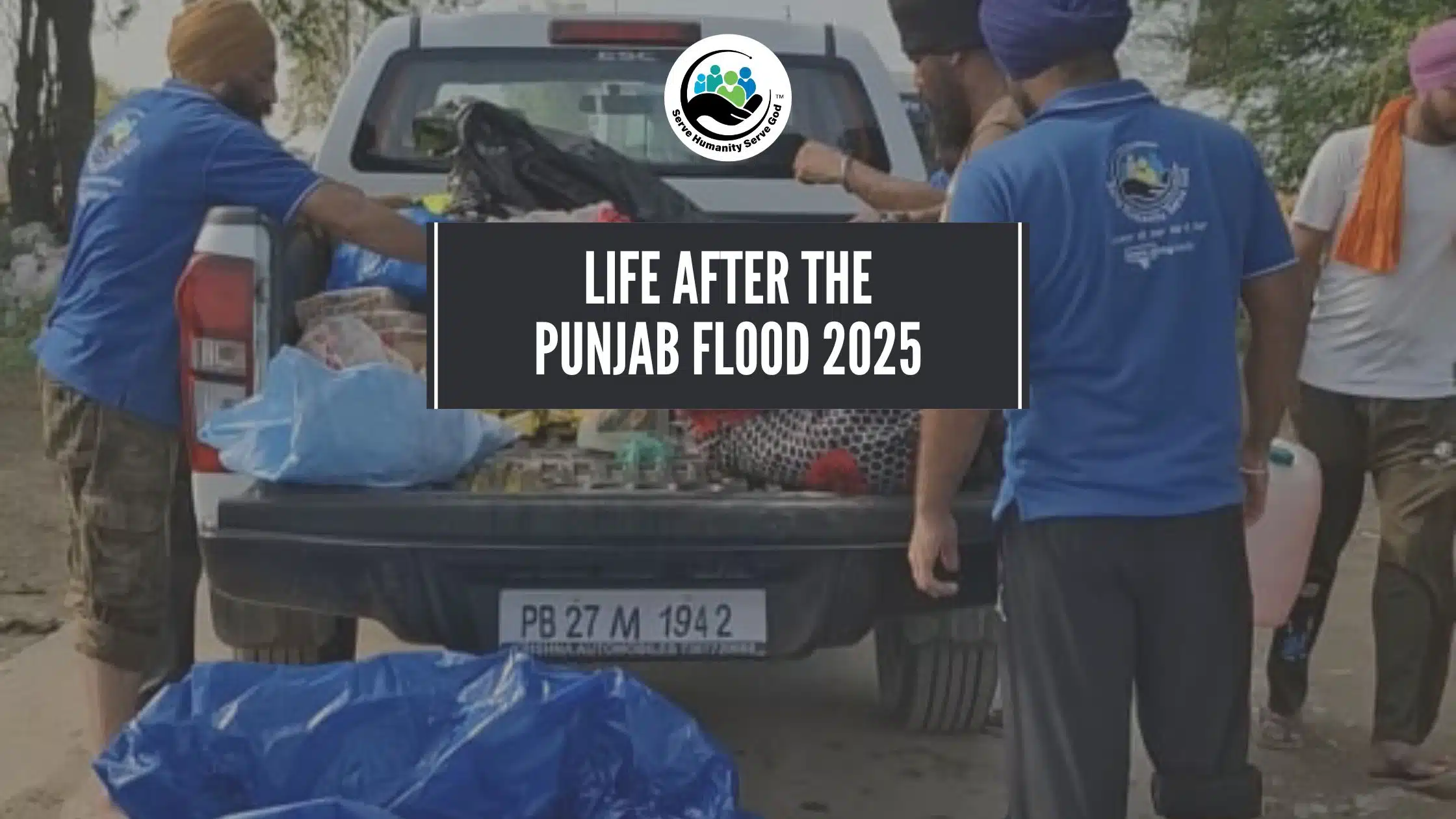
    SHSG extends service beyond houses in the post-flood relief effort. The Trust continues to provide ration kits, clean water, furniture and daily needed supplies to families who are still recovering from the floods. Each act of seva is a concrete engagement of the mission of the Trust.

    “Serving humanity is serving God.”

    Seva continues day after day as volunteers and partners are collaborating to make sure that no affected family is left behind. 

    This way of service work would not be possible without the ongoing support from Jet Singh Trust and Sahaita USA. Together, these organizations have built a chain of compassion that connects communities and rebuilds lives across borders in Punjab. 

    These groups’ mission truly embodies what is at the heart of humanity – when we come together, we can address some of our greatest challenges. 

    Join Hands in Seva

    Even months after the floods need remains strong. Families in the area still need homes, food other support to begin to rebuild their lives. SHSG Charitable Trust invites everyone individually, organizations and communities – to join together in seva and provide relief to the impacted flood families in Punjab.

    Together, we can rebuild lives, restore hope, and keep seva alive.

  • Hope in the Mud: The Untold Story of Punjab’s Post-Flood Recovery 2025

    Hope in the Mud: The Untold Story of Punjab’s Post-Flood Recovery 2025

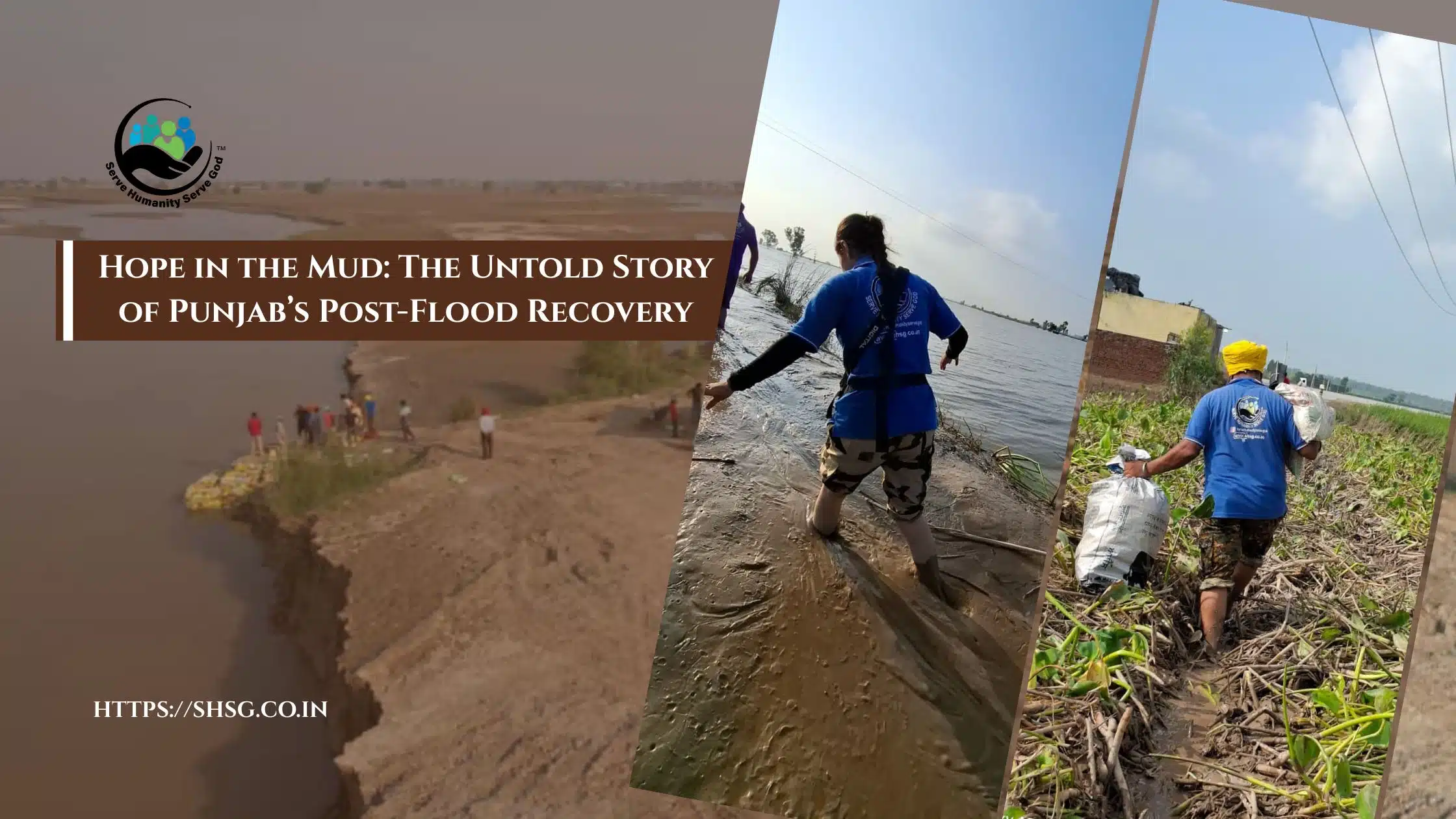
    The floods devastated miles of farmland. Crops were lost within days of harvest, irrigation channels failed, and fertile topsoil was washed away. For many families, the disaster represented more than losing; it was losing the basis of their lives and living. 

    For the farmers in Firozpur and the surrounding districts, they faced the impossible mental dilemma: how does one start over again with nothing left that was not washed away by the water? 

    Despite the historical odds surrounding their situation, the farmers were dedicated to rebuilding. True to the Punjabi tradition of moral courage, they did not wait until the conditions were ‘perfect’ to begin to rebuild; they made it ‘perfect.’ As soon as the rain ended, the farmers got together to tidy the rubbish, create a balanced soil profile get their fields cultivated again. The field was tilled, but the farm has not changed.

    Sowing Seeds of Hope

    These days, you can wake up every morning to the sound of tractors moving through the flood-impacted villages once again. The soil feels wet, muddy, and heavy yet was being tilled, slowly, gently, as if bringing an old friend back to life. Farmers are planting seeds of hope in the only ground that previously swallowed their crops. 

    But it is not an easy ride back. The fields still stand with a cover of silt, and tractors constantly get stuck in the heavy mud. Farmers can spend hours extracting them from the mud, losing precious time and diesel fuel. And diesel is in incredibly short supply.

    For so many farmers, right now the biggest challenge is not manpower, capacity and desire. It is diesel. Diesel is the lifeblood of this recovery operation, powering not only tractors, but also water pumps and transportation for relief efforts. Without it, they will be paralyzed in their progress, and without support, their confidence to carry on slips away with each passing hour.

    The necessity to donate diesel has never been so pressing. The diesel donated will allow every litre to go directly into rehabilitating the fields of Punjab, allowing farmers again to plow their fields, irrigate their crops are ultimately ensure the livelihoods of many families will return. 

    What shines in this disaster is the power of seva (selfless service) and community. Local volunteers, NGOs, and humanitarian organizations, including the Serve Humanity Serve God Charitable Trust team, have been engaged on the ground for nearly 45 days. 

    These groups are assisting in the rehabilitation of damaged houses, feeding livestock, providing essential items, and providing farmers with tools and equipment. Wherever there has been a need and request for assistance, the SHSG team has stepped up to demonstrate that compassion travels quicker than any flooding. 

    This work is not just an example of relief work; it is a movement of solidarity. People from all walks of life, farmers, truckers, and volunteers have come together to begin rebuilding their villages. They are joining forces to convert despair to fortitude and destruction into cultivation.

    Rebuilding Punjab is always more than rebuilding land – it is rebuilding community. The muddy fields of Firozpur are an archive of people who fought back against collapse. Elderly farmers, having lost everything, are outdoors teaching young ones how to start again. Women’s groups are back serving and distributing meals and seeds. Displaced children are back in school thanks to generous locals.

    Each act of kindness, no matter how small, is a reaffirmation that Punjabi hearts beat strongest in adversity. The same soil that was drenched in brown water is, once again, being healed back to green – one plough, one seed, and one prayer at a time. 

    A Call for Diesel

    Despite all these fantastic efforts, the barriers are still enormous! There are many tractors that cannot be put to work because they are out of fuel. Farmers lost their livelihood and can no longer afford to buy fuel.

    That is why diesel is so important; it’s the foundation of this entire recovery mission. With diesel, farmers can plough fields, run irrigation pumps, and move supplies in villages still affected by the disaster.

    The support of the community through diesel, money, and volunteer effort has been what continues this mission onward. Every bit of effort continues to bring us closer to recovery for Punjab.

    So, if you can, please contribute some diesel, some of your resources, or at the very least help spread the word. Every little bit helps to make sure that no farmer is left to recover by themselves.

    The floods may have tested Punjab’s strength, but they could never wash away its spirit. Across Firozpur and beyond, hope is rising again — not in grand gestures, but in small acts of faith. A farmer restarting his tractor. A volunteer delivering diesel. A child playing beside a field that’s turning green again.

    These are the sights and sounds of a land rebuilding itself from the mud.

    Punjab’s recovery is not just about crops — it’s about people, pride, and perseverance. The fields may have been silent once, but today, they hum with life, courage, and gratitude.

    The story of Punjab’s post-flood recovery is a story of ordinary heroes doing extraordinary things. With every drop of diesel, every helping hand, and every shared meal, we’re not just rebuilding farms — we’re rebuilding futures. Let’s stand with Punjab.
    Let’s keep the tractors running, the fields growing, and the hope alive — even in the mud.

  • Punjab Flood Relief in Qutabdinwala: 40+ Days of Ongoing Seva and Home Rebuilding with Sangat Support

    Punjab Flood Relief in Qutabdinwala: 40+ Days of Ongoing Seva and Home Rebuilding with Sangat Support


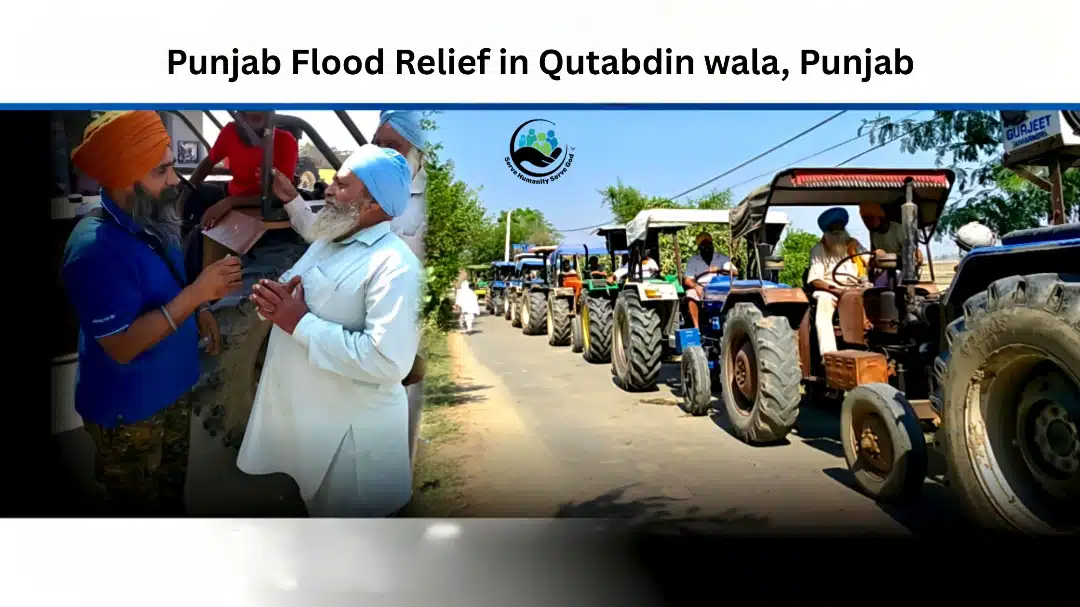
    For the past 40 days, we have been providing rehabilitation support in Qutabdinwala Village, Firozpur, Punjab, which was severely impacted by the recent floods. This rescue and rehabilitation effort has taken place as the result of the hard work of members of the sangat, some of whom are from outside the state for this purpose, and through the support of the organization Jet Singh Trust. This collaboration has enabled tremendous rescue and rehabilitation work to restore hope, dignity, and livelihoods for many families impacted by the devastating floods.

    We have moved 50–60 tractors to deliver flood relief goods and building materials to Qutabdinwala and neighboring villages. Each tractor is supplied with 20–25 liters of diesel generously, supported by the sangat. This incredible mission could not have succeeded without the collective support of the sangat and those who contributed to flood relief efforts. The Jet Singh Trust has also stepped in when we needed support, coordination, and the spirit of seva.

    The purpose is shifting from relief to rebuilding homes that were damaged or completely lost in the flooding. In Qutabdinwala, we now have, at a minimum, 10–12 homes underway, working slowly and purposefully to erect each structure with proper kitchens, bathrooms and standards of quality.

    Some families lost their source of income, such as cattle, in the flooding. Because of the generosity of the ever-minded individuals and groups, families have a second chance. This is not just a building. It is returning dignity, safety, and hope for the future

    Sangat’s Role:

    These acts of service have happened entirely due to the amazing support of the sangat — the people who contribute their time, money, and resources so that, in general, seva never stops. From diesel for tractors to building materials and labor, all of this serves to show the power of solidarity and compassion.

    Final Words

    What is happening in Qutabdinwala echoes the power of unity, seva, and compassion. Although the water has receded, the need remains. After over 40 days of seva, let’s keep the momentum going to ensure that every family has a safe home and the village is completely rebuilt. Seva continues with your support. Together we can rebuild lives.

  • Life After the Punjab Flood 2025: Rebuilding Homes, Livelihoods, and Hope Across Affected Areas

    Life After the Punjab Flood 2025: Rebuilding Homes, Livelihoods, and Hope Across Affected Areas

    The disastrous impacts of the Flood of 2025 impacted countless families across Punjab; whole villages were inundated. The destruction from these floods was immense, but the people of Punjab are particularly resilient. There are new activities to help resettle the homes, livelihood, and hope in the affected region.

    Rebuilding Education: A Bright Future for Children

    Children have suffered the most without their learning tools.  It is understood that education is the basis for a better future and must continue during tragedy and disaster. 

    To this end, support was provided as part of the Rebuild Punjab After Flood 2025 initiative to distribute backpacks, texts, and study kits containing learning essentials to children attending schools in impacted villages.  Financial assistance was also given to families to assist with students’ school fees – including grade 10 board fees – to support students’ education even during a disaster.

    Education can be much more than just academics: education is hope, it is a source of stability, and it is a ticket to a better life. We also encourage the Government of Punjab and the Department of Education to consider waiving Board fees, in retrospect, for the children that have been impacted by the flooding process. That one action would mean so much to families in our communities who are in the process of rebuilding their lives. Even if a full waiver is not possible, we ask that special relief programs be considered to help support education for children. When we preserve education, we are preserving recovery and resilience in Punjab for the long term.

    Restoring Livelihoods: Giving Families a Fresh Start

    Restoring homes is necessary, but restoring incomes is equally important. Countless families, particularly in villages like Qutabdin, lost their livelihoods in the floods. To help them recover, we are giving cows to flood-affected households so they can earn a small income and have a level of livelihood stability through dairy production. 

    So far, this process is having a terrific impact on the lives of many families because it is giving them a path of self-sustainability and dignity to rebuild their lives. Every day these services are growing and more villages and families are being served. Your contributions can also continue to grow this work and bring additional families and households to self-sustainability and confidence.

    Urgent Need: Soil for Land Recovery.

Honestly, the rains have ceased. Yet, many places are still underwater or saturated, turning farmland into rivers. The water has removed the productive soils, and it needs soil right now.

We are mobilizing trucks containing soil to villages affected by the floods. However, the need is massive. Rebuilding the soil is the first step to restoring housing, farmland, and local infrastructure. Homes cannot be rebuilt without adequate land restoration.

The community is working extraordinarily hard on their own, yet it will take many of us working together as citizens and organizations to expedite the recovery of the flooded areas. Every organization, no matter the size of the organization and size of the contribution, every truck of soil, every logistical support, and every dollar spent is restoring life into the region.

    Once Again, the Youth Are Needed — Together, We Can Rebuild Punjab

    Let’s unite and help a sinking region, for our Punjab! Though the flood has tested our strength, it has not broken the unity and resolve of Punjab’s people. The Punjab Flood 2025 impacted several thousand families, and this is a time to support and unite for those in need. Every little bit counts. Anyone who offers help, either through financial donations, physical help, or promoted awareness, is effecting change. Even the smallest acts of helping — combined — have great capacity to create wave-like support for devastated communities. Recovering from a natural disaster is a community effort and needs compassion and patience. Together – as citizens, groups, and government representatives – we will rebuild homes, restore livelihoods, and rekindle hope for families affected by the flood.

    Every donation helps. Every act of service helps. Every means of support helps. When rebuilding Punjab, it is not just about the physical structure; it is about rebuilding lives, dreams, and for some, dignity.

    Join the Service of Humanity. Every action, every donation, and every helping hand can help. Together we can rebuild homes, restore livelihoods, continue the education of children in our communities, and bring back hope to every corner of Punjab. Your support, big or small, can help empower the community to change, one village, one family, one child at a time.

  • SHSG Charitable Trust’s 12 Wheelchair Runners Participated in Tuffman Chandigarh Half Marathon 2025

    SHSG Charitable Trust’s 12 Wheelchair Runners Participated in Tuffman Chandigarh Half Marathon 2025

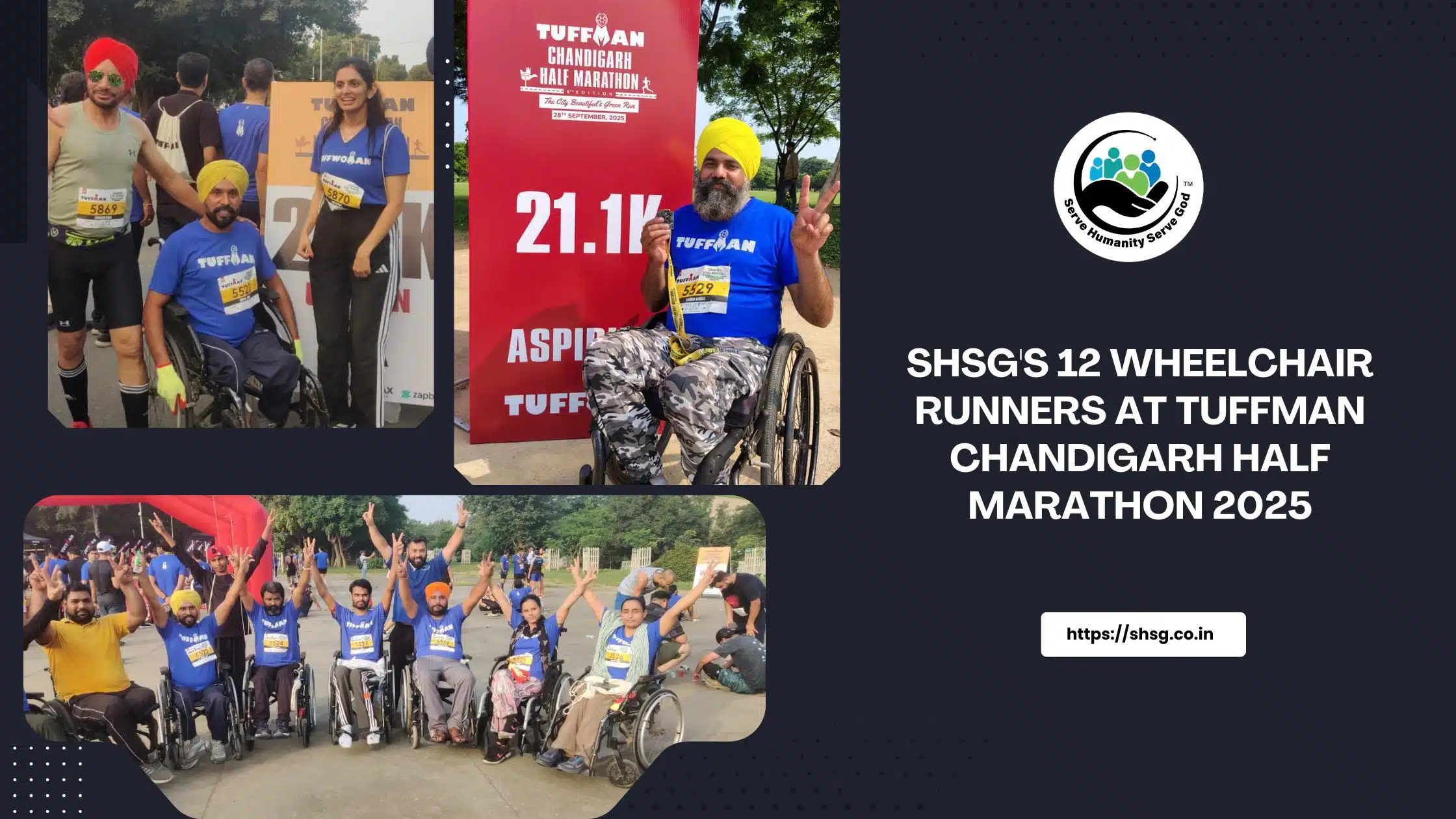
    On the 28th of September 2025, as part of the Tuffman Chandigarh Half Marathon 2025, 12 wheelchair runners from Serve Humanity Serve God (SHSG) Charitable Trust will be running the 5 km starting at 6:30 am; this is not just a sporting event; it is a story of courageous athletes, empowerment and inclusive values.
    Sponsoring wheelchair athletes so that they can participate in the marathon demonstrates what SHSG is about, empowerment and equality. Their participation shows that while physical disabilities are different, participation and achievement in sport and life can occur.

    For SHSG runners in wheelchairs, the 5 km race is not just an achievement in the physical sense – but also as a celebration of resilience. Each runner embodies strength and perseverance and conveys a very simple underlying message – inclusion in sport. It signifies a moment for society to consider doing better in terms of education, employment, and sport for individuals with disabilities. This sporting event also raises awareness of the differences in accessibility and infrastructure affecting quality of life for individuals living differently – with dignity. In all sporting events, including the Chandigarh Half Marathon, we seek to change mindsets and recognize that all of us deserve to be fully included in experiencing and possessing all that life has to offer.

    Breaking Barriers and Inspiring Change

    The participation of SHSG’s 12 wheelchair runners in the Tuffman Chandigarh Half Marathon 2025 demonstrates service, awareness, and inclusion in a meaningful milestone.

    Their 5 km journey is not about finishing a race, but to show others:
    (a) that they could be a source of inspiration,
    (b) that stereotypes of what people can or cannot do can be broken, and
    (c) A person not being able bodied does not mean they do not have their own strength, true strength is wrapped up in the determination to keep going. 

    This serves as a reminder, that if society stood together, barriers could be broken down, and everyone could elevate the level of self-belief and find partners who help them towards their dreams.

  • Medical Help for Underprivileged Patients: Free Healthcare, Medicines & Support

    Medical Help for Underprivileged Patients: Free Healthcare, Medicines & Support

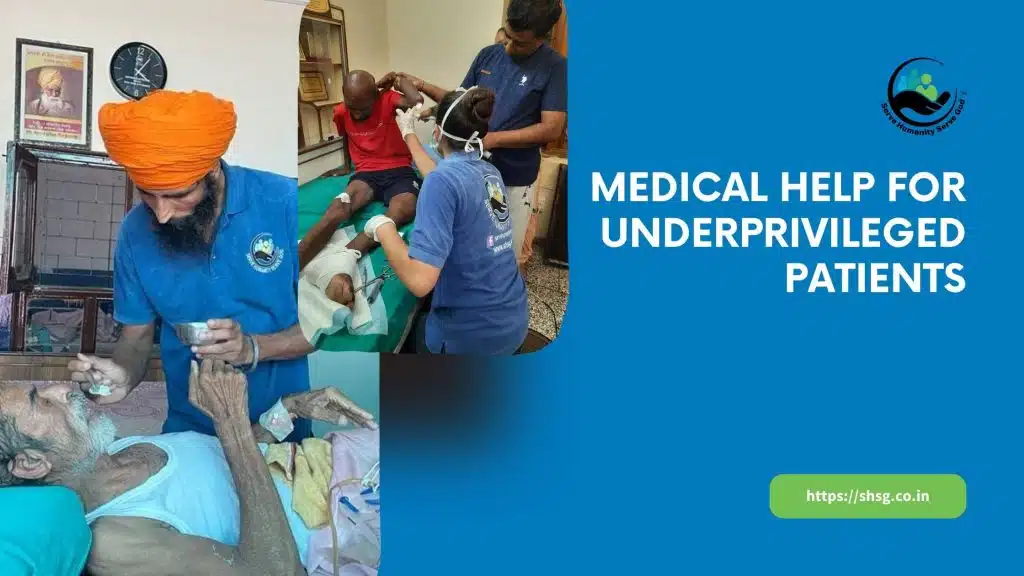
    Everybody has the right to healthcare, yet many impoverished patients in India cannot afford even the most basic treatment options. Various consequences emanate from poverty for individuals, particularly with a disabling injury, to care that is necessary for life sustaining treatment for a chronic illness, signaling errors in health equity and access for communities at risk exploring access to medically necessary treatment that can enhance their lived experience, not be tied to poverty or stigma, and, provable dignity and hope in the healing process.

    Medical Help That Transforms Lives

    Individuals with lifelong disabilities caused by spinal cord injury or chronic illness have mediocre needs for aftercare, rehabilitation, mobility, and activities of daily living, while accessing healthcare and their related support systems, many families exist in poverty and cannot begin doing so.

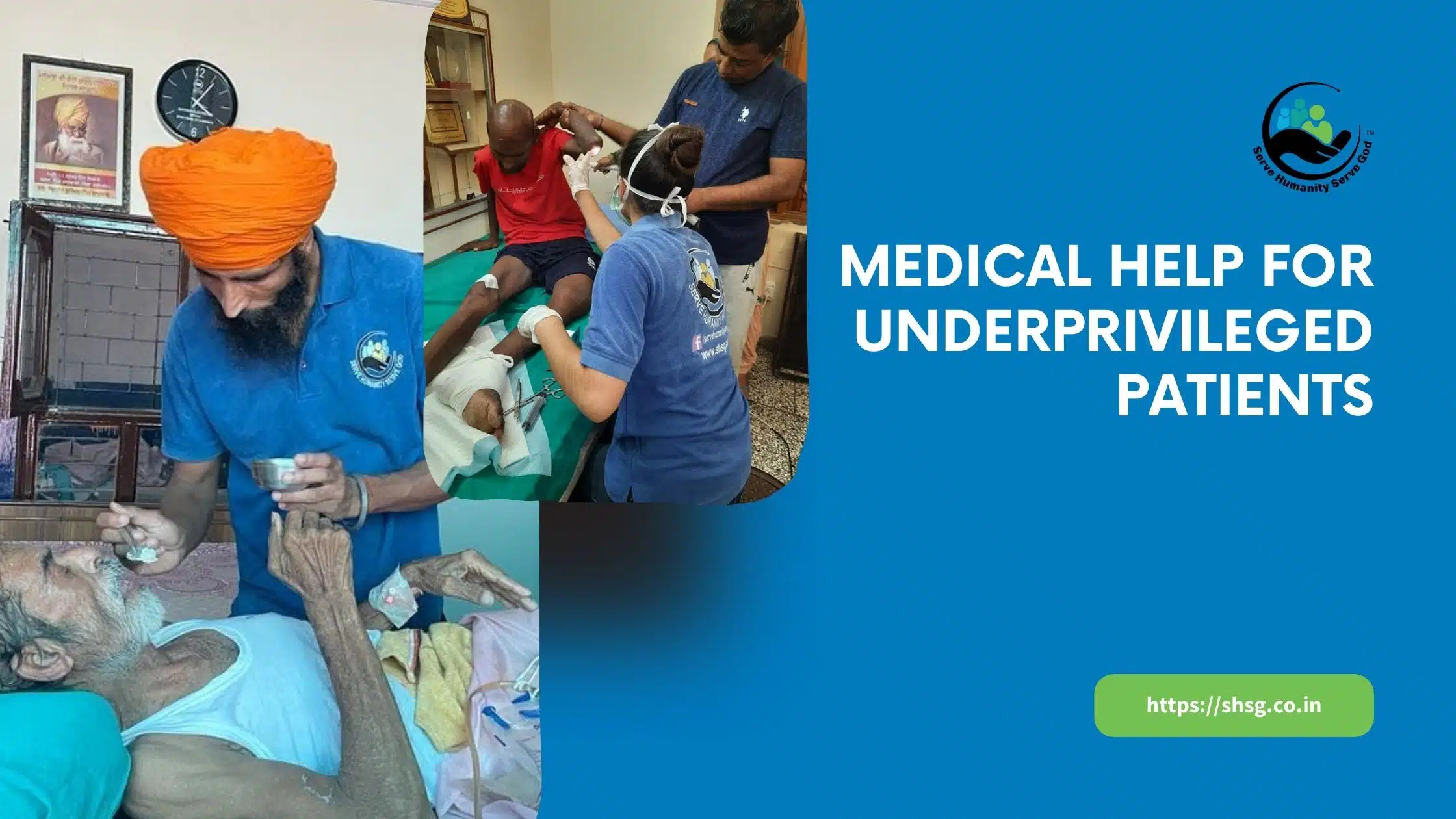
    This is an important role of social welfare organizations, to provide medically needed treatments that are free to the family/patient. Treatments can involve prescription medications, surgery, rehabilitation, and other medical and social support such as food, lodging, and wheelchairs, if they are medically necessary. Social welfare organizations not only provide treatment to the families, but they also help patients regain independence and confidence.


    Role of Charitable Trusts in India

    Charitable Trusts in Punjab represent a ray of hope for patients in need.  Their work includes:

    • Free treatment of patients with spinal cord injuries, 
    • Distribution of medications to needy patients in the hospital, 
    • Funding for surgery and life-saving procedures, 
    • Providing training, motivation, and rehabilitation help. 

    These highlights show that when you make a donation to charitable trusts in Punjab, it means so much more than giving money. It is part of a unique & innovative strategy to rebuild lives & provide equality in healthcare access.

    Behind every recovery story is an act of kindness. Each contribution directly provides life-saving medicines, surgeries, and care to those who have nowhere else to turn. By supporting Serve Humanity Serve God Charitable Trust, you are not just giving medical help — you are giving someone the chance to live with dignity, health, and hope.

    Your donation has the power to transform lives, turning pain into healing and despair into confidence. Together, we can ensure that even the most disadvantaged patients in Punjab receive the healthcare they deserve. 


  • Post-Flood Relief in Punjab: Contribute to Cow Donations This Navratri

    Post-Flood Relief in Punjab: Contribute to Cow Donations This Navratri

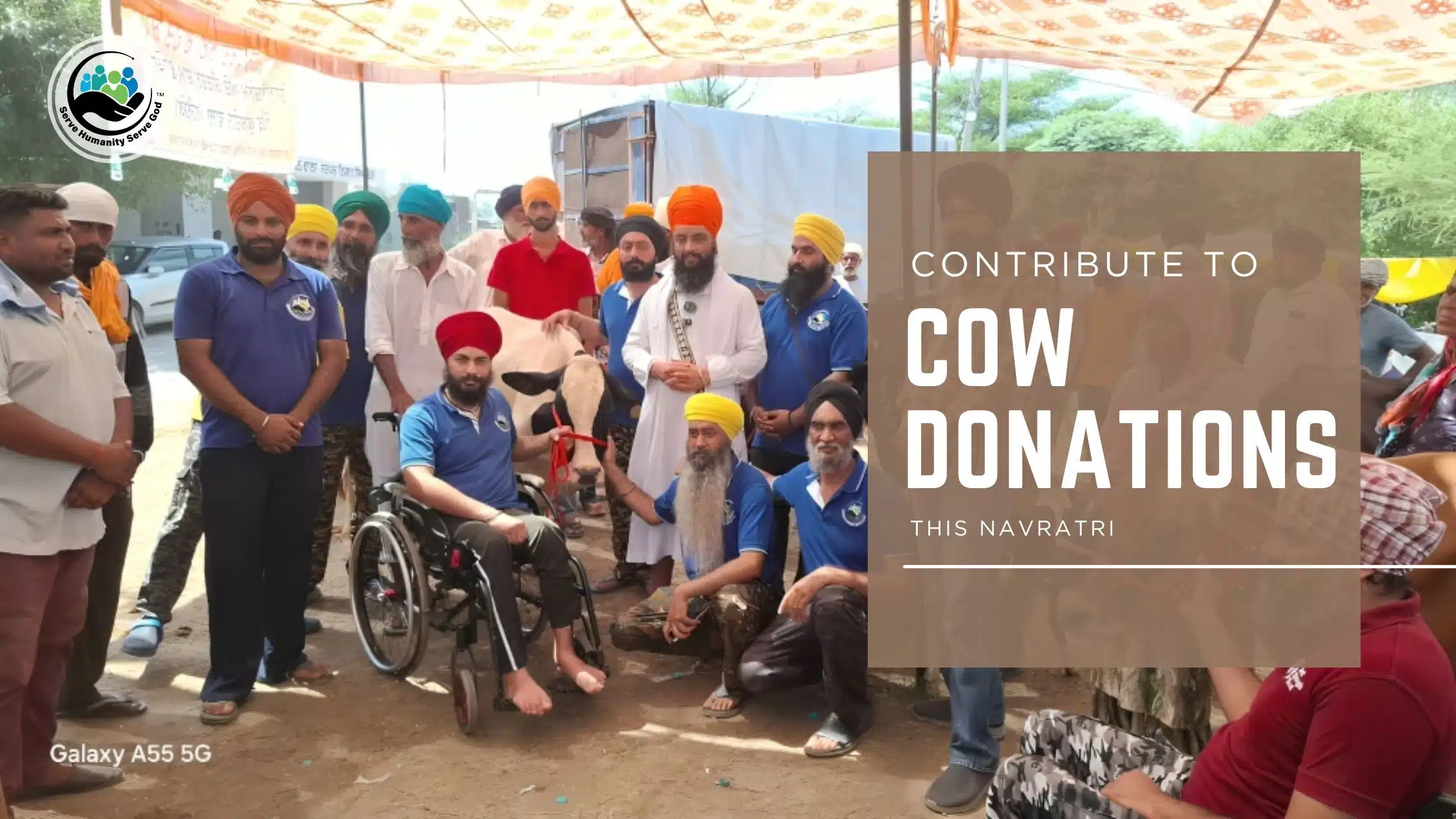
    The recent floods in Punjab have left families struggling to survive, with both people and animals losing their means of livelihood. For the past 18–20 days, continuous relief camps have been running in Qutubdin, extending every day to support those in need. Now, as part of long-term recovery, a new initiative of cow donations has begun—offering both livelihood and hope to affected communities.

    The First Allotment of Cows Arrives

    A ray of hope has already reached the flood-hit families. The first allotment of 5 cows has arrived in Qutubdin, marking the beginning of a new chapter in recovery. The journey does not stop here. The next allotments of 10 and 20 cows are already in process, and more will continue as support grows.

    We will be getting cows from Rajasthan, Mohali, and nearby areas. Each cow means more than a living animal. It means survival, nutrition, and dignity for a family. It means fresh milk for a child every day. It means food security for a mother. It means income for a farmer arriving for the first time in months.

    Reasons cow donations are so important: In situations like a disaster, usually the majority of assistance comes in the form of food packets, blankets or temporary shelter. While those are great short-term supports for a family during disasters, none provide a family months and years of sustenance. A cow instead provides:

    • Nutrition: Milk keeps children and other members of the family from starving.
    • Livelihood: Dairy will offer families with an annual income stream.
    • Sustainability: Cows offer an income for years, not days, for a family.
    • Cultural Value: Cow donation (Gau Daan) is one of the most pious and meaningful forms of sewa in Indian tradition like Navratri.

    This initiative is not just relief—it is rebuilding with compassion and foresight.

    How You Can Support This Navratri

    As we honor Navratri, a time for devotion, power and renewal, we take this opportunity to invite you to give. Giving comes in many ways: 

    Donate a Cow: Healthy cattle you own could immediately change a family’s life! 

    Donate Financially: Your gifting will be pooled with others to purchase cows from Rajasthan, Mohali and adjacent producers. 

    Share Widely: Share basically everywhere, WhatsApp, social media, your networks of community and family. Each share will have others do the same.

    Capturing and Sharing: Video documenting and stories of your sewa will inspire folks to get involved. 

    Navratri is an opportunity where millions of devotees are going into prayer, fasting and charitable action. Giving in the form of gau daan, is anything but a donation during this holy season. It is an act of spirituality of the giver and the recipient, blessing and healing. 

    Together, let’s make this Navratri a time of real sewa. Your support will help Punjab get back on its feet again.

    “Sewa” continues always, and with your support, it continues to grow stronger every single day.

  • Fueling Hope: How Diesel Donations Drive Flood Relief in Punjab

    Fueling Hope: How Diesel Donations Drive Flood Relief in Punjab

    In times of crisis, the world’s attention goes straight to the essentials, like food, medicine, or shelter. All of these are terribly important for the survival of many people, and there is another medium, diesel, which in the background is helping to fuel all these relief efforts.

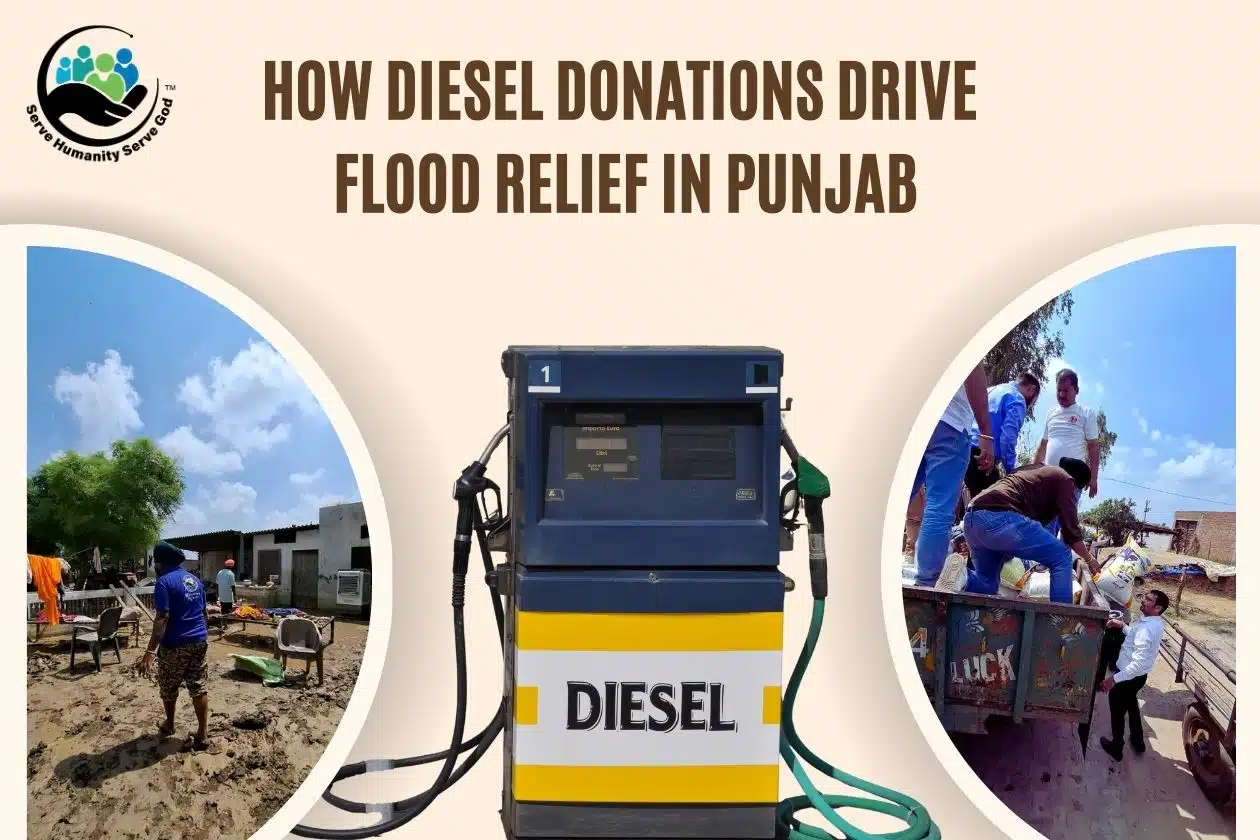
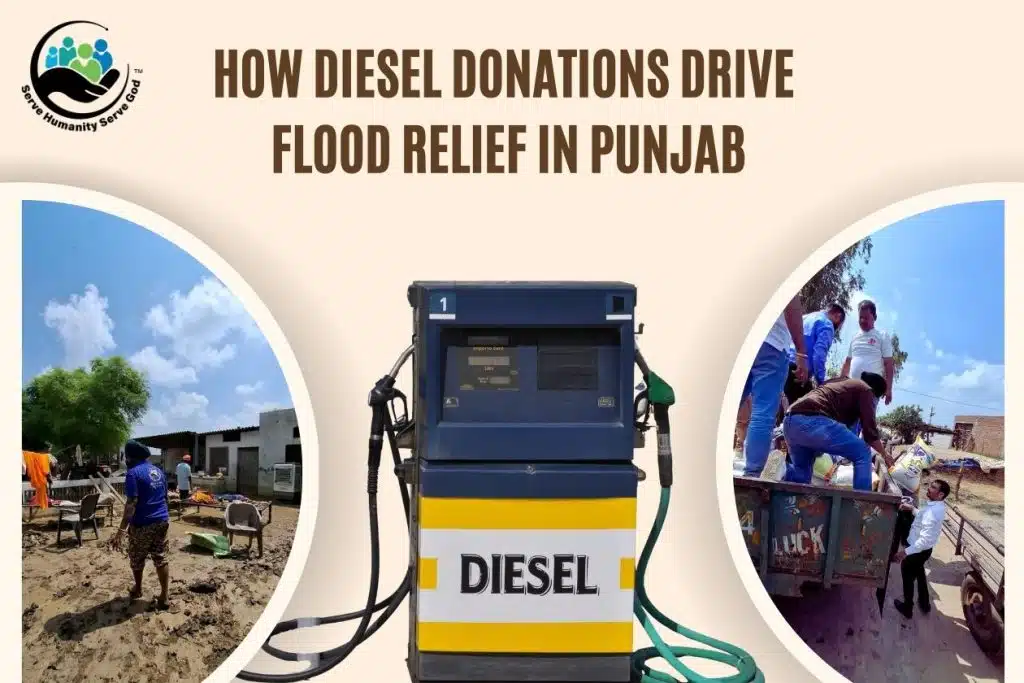
    In the recent floods in Punjab that destroyed complete villages, diesel was the “invisible” energy which made possible every act of rescue and recovery, from the boats removing families from danger, to the tractors clearing mountains of mud, diesel was the energy that revived hope.

    This is where your donations of diesel may change lives and help rebuild entire communities, no matter how large or how small they are. Farmers looked helplessly as their fields were layered under sand and mud. Those that had cows and buffalo — which is their livelihood — stood in disbelief as they either watched them get stuck in the mud, or saw them wash away in deep water. 

    It is easy to overlook diesel in relief work. While food and blankets are consumable household items, diesel cannot be considered a consumable item by families, or by relief workers needing diesel to get anything useful delivered.

    We know diesel is important as follows:

    Rescue Rafts: Diesel-powered boats and rafts are crucial for the rescue of families in distress and seeking refuge from rising waters. 

    Messiest Cleanup: As floodwaters recede, villages will have thick layers of silt and slippery mud covering them. To make paths for getting around, and to clear farmland for agriculture, clearance will need to be done with heavy machinery and tractors. There will be no recovery without diesel.

    Transportation of Goods: Every day, dry rations, medicines, mosquito nets, and fodder for more animals still need to be delivered. Trucks and tractors are meaningful tools for relief work to supplement resources in isolated villages. The only thing that moves things by outfitting them with necessary diesel.

    Livelihood for Farmers and Animals: In rural Punjab, families make their livelihoods off of animals and agriculture. Diesel is used when farmers turn their fields, to pump water off fields, and to deliver fodder to animals. Diesel is significant to farmers, providing them the opportunity to start their livelihoods again.

    So,diesel is not simply the fuel to get something going, diesel is the backbone of the whole relief effort.

    How You Can Contribute

    If you want to support flood-affected families, here’s how you can help:

    Donate Diesel Direct: Diesel that goes directly into rescue vehicles, boats and tractors.

    Sponsor Fuel Cost: You would be supporting diesel for relief team daily operating costs.

    Spread the Word: Let everyone know how diesel seva can be a lifeline for continuing relief.

    Support Farmers: By contributing diesel expenses you help farmers get back on their fields and feed their families and animals.

    Every drop makes a difference because every allotment of diesel puts wheels of hope in motion.


    Conclusion: Diesel as a Symbol of Hope

    Diesel may appear ordinary in daily life, until a catastrophe takes place. Diesel fuels the courage of volunteers, diesel powers the equipment that dismantles the wreckage, and diesel transports life saving supplies. 

    During the Punjab disaster, diesel donations articulated that it is more than a commodity – it results in betterment. 

    Your diesel seva is more than diesel – it is diesel and kindness as action. Together, we will fuel hope, restore dignity, and rehabilitate lives, one family at a time.

  • No One Leaves Their Home: Inspiring Stories of Sewa During Tough Times

    No One Leaves Their Home: Inspiring Stories of Sewa During Tough Times

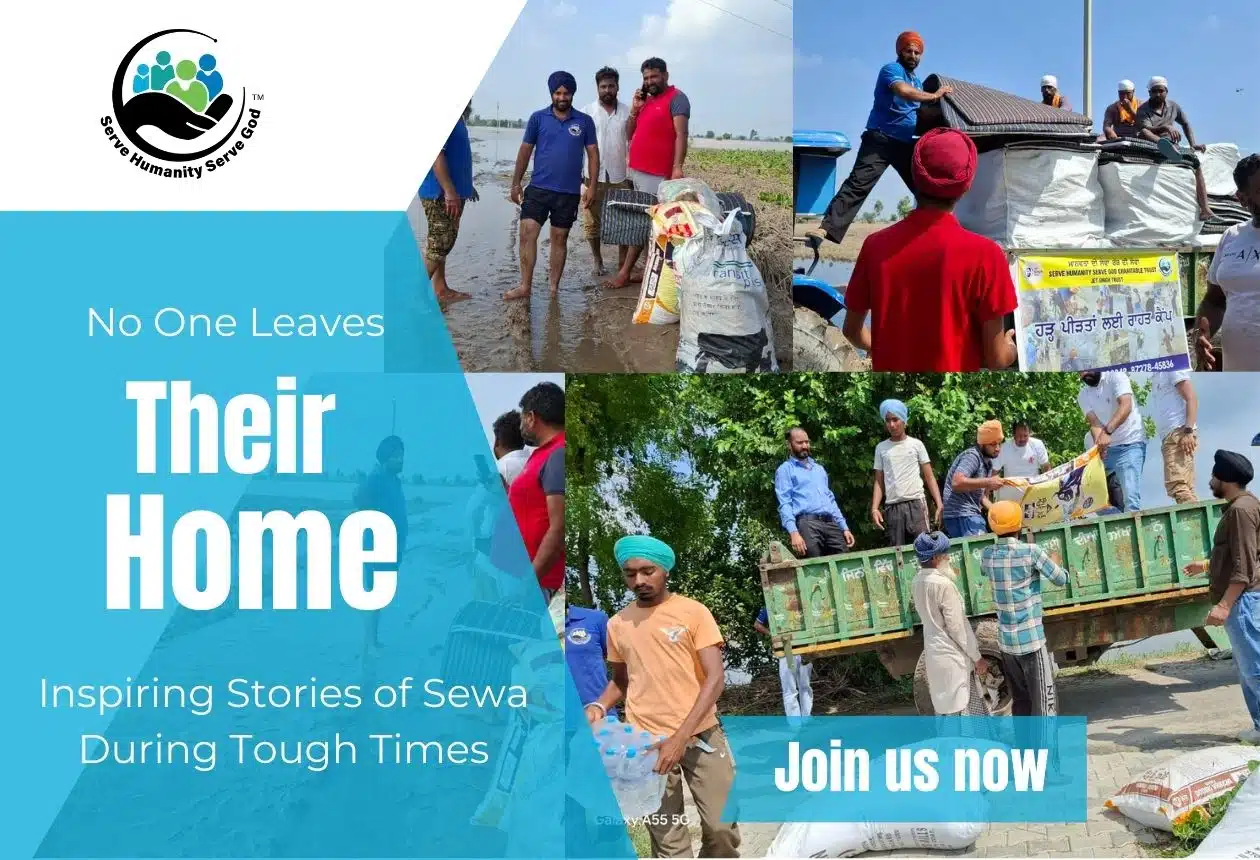
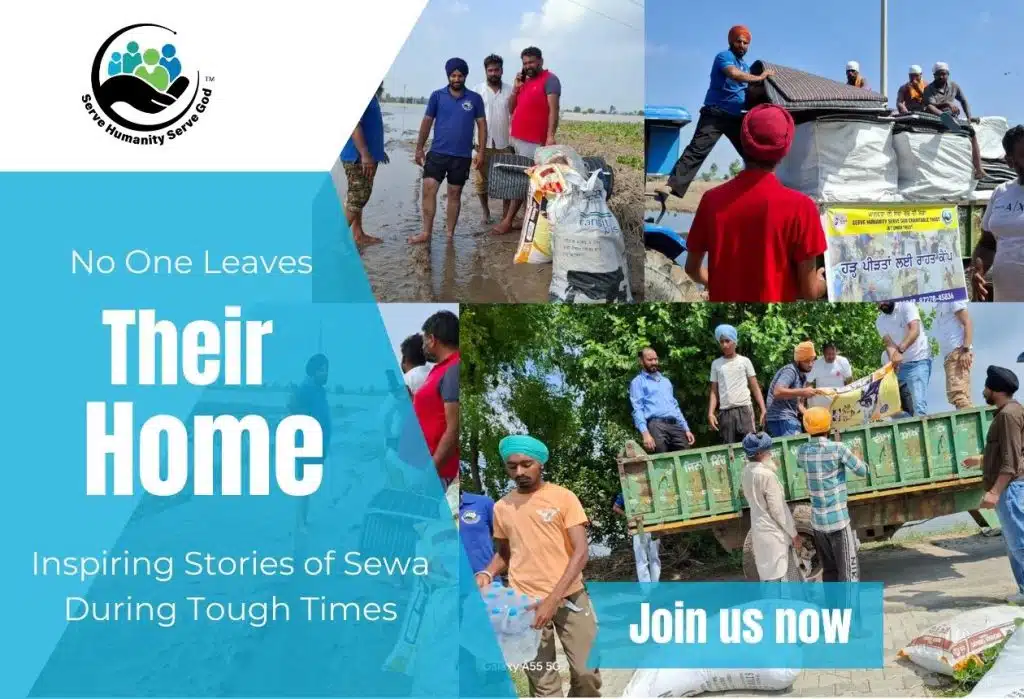
    Houses are not just walls and roofs, they are where families grow, generations develop, and memories build. After the flood many families in Quatodbin, Punjab are grappling with hardships that are hard to even imagine: houses are destroyed; like fields, which were once crops, are now dark, still water. They would not leave; the connections are far too emotional and meaningful to want to be anywhere but home, even if they are also at home on the streets or in flooded fields. The devastation is inconceivable.

    The SHSG team visits every household, providing the families with some direct assistance in the living environment of the home. Due to a lack of fresh drinking water, each household was given a bag of bottled water that they can use for drinking, cooking, etc. We also distributed bed mattresses since families lost all their furniture in the flood, and they are in need of beds. 

    The purpose is immediate relief and support rebuilding for families to again feel safe living back in the home.

    There is significant destruction in the flooded areas. 

    Farmlands that used to grow crops continue to be covered in stagnant and polluted water, and growing crops here will be impossible. 
    Fish and other aquatic life have died, and the ecosystem, with people who relied on it, has collapsed. 
    Homes had damage; walls have cracks, roofs are compromised, and people have lost everything. 
    Families carry an emotional and financial burden, with the money and time spent over many years on farming and everything purchased day-to-day for the household, and that was lost in an instant.

    Hope remains, even at the darkest hour. SHSG volunteers have shown the human spirit can endure, even on the darkest days of lives. The volunteers are restoring dignity, safety, and hope for Nicole and her neighbours who have lost almost everything, by assisting them with reaching out and resourcing their families directly at their home.

    These villagers of Quatodbin are strong. They want to stay in their areas, and they want to keep their roots and bloodlines. They need our support. Together, we can relieve their suffering, restore their home, and rebuild their lives. 

    Support the flood-affected families of Quatodbin.