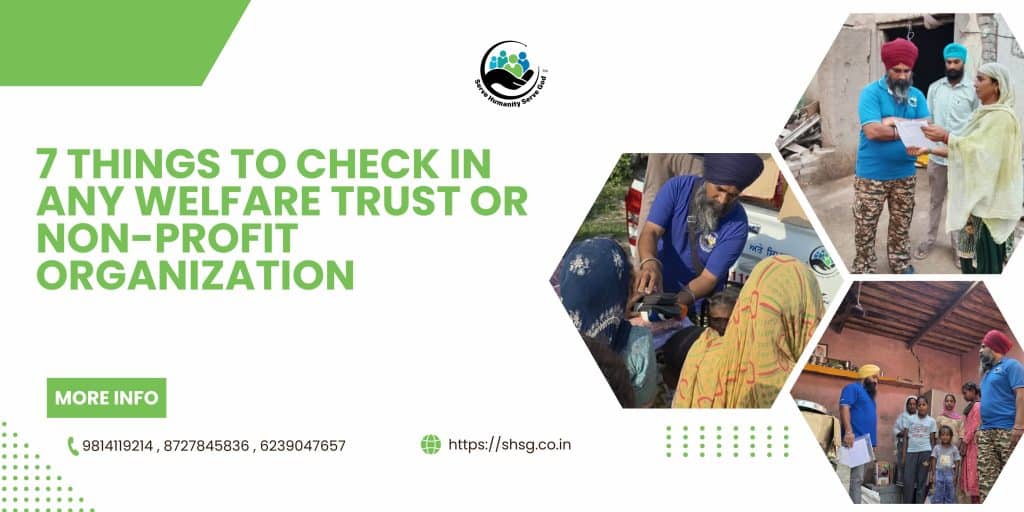
Donating to charity to support society is an extremely rewarding act that anyone can do. No matter what type of charity you choose to donate to, the positive effect that your donation will have on an individual’s life can be very dramatic. The value of helping children, providing medical care, disaster relief, education and many other ways has greatly increased due to the rapid growth of online fundraising, social media fundraising campaigns, and the large number of charitable organizations in India. Many prospective charities are unsure that their donations will actually reach the needy due to the reasons outlined above. Another reason why many prospective donors are unwilling to donate to a charity is because they do not trust the organization to which they plan to donate. As such, it is very important for potential donors to confirm that the welfare trust or charity is a legitimate organization prior to donating their hard-earned money to them. Invest a few minutes to confirm that you are donating to a welfare trust, and you will guarantee that your donation will be used to help those people who are truly most in need and not be exploited by any fraudulent charity.
There are seven major items worth checking into when deciding if you want to give a donation to a welfare trust or NGO or non-profit organization.
1. Verify That the Trust Is Genuine and Registered
The first requirement is to make sure that a not-for-profit organization (NFP) is correctly registered. Every valid charitable organisation will have documented evidence of their registration with the appropriate regulatory body, along with all the necessary legally required documents. By verifying the registration of a charitable organisation, it will provide assurance to you that the organisation is being properly registered and that it operates in a transparent manner, consistent with federal legislation.
2. Check Their Past Work and Real Social Impact
Another way of evaluating a charity is to review their history of charitable works. Reputable NFPs will commonly publish on their websites or use a publication to advertise and demonstrate the charitable works they have accomplished in the past. Reviewing the calendar of events and documented successes can give you an idea of how much experience the charity has had over a period of time. Examples of how to evaluate a charity’s past success include:
- Documented success stories
- Authentic images and videos from the various events
- Documented humanitarian aid efforts (for example: Flood Relief, Pandemic Relief, etc.)
- Documented evidence of corresponding activity related to events (via Social Media posts)
- Testimonials from both beneficiaries and Volunteers
- Documented projects
If the charity has only used stock photographs, does not provide sufficient information about its programmes and/or projects, and provides limited evidence of past accomplishments, it is best to not donate to this charity. A legitimate Welfare Trust will always be able to provide complete and accurate documentation of its past successes, along with an abundance of stories demonstrating the impact of their efforts.
3. Check Their Transparency With Funds
Also, check how transparent they are with the way they receive their donations. Transparency is one of the major indicators of a welfare trust that is reputable and therefore worthy of your trust. When you can trust a welfare trust, it will be totally open and honest about:
a) how donations are allocated,
b) The amount of the donation that will go toward general overhead costs,
c) The amount of the donation that will be used for the specific purpose of the charitable organization,
d) Annual Budget/Financial Statements
e) Detailed project reports
Most charities will publish an annual report detailing how they spent the donation and where the donation was used, which helps ensure you know exactly where your donation goes. Therefore, if an NGO is unwilling to release its financial records and/or is unwilling to answer questions about how it spends the funds they raise you cannot trust it. You should always have a good understanding of how your contributions will help someone in need.
4. Review Their Online Presence and Reputation
Also, review the digital presence of the organization to evaluate its credibility. A legitimate welfare trust will have a robust digital presence.
Ultimate Checklist
a) Official website: Updated with current information and is detailed.
b) Social Media Accounts (Facebook, Twitter, etc.): Will have posts about events, including photos.
c) Google Reviews (Comments) from authentic donors.
d) News articles published based on the work of the organization.
You can also research the name of the welfare trust along with the words “scam,” “fake,” “reviews,” or “experience” to see if there are any reported complaints against them. An ethical welfare trust and a solid reputation online instills confidence in potential donors.
5. Confirm Contact Information and Physical Address
A genuine charity in India has verified and valid contact details made publicly accessible via the internet, such as;
• The actual physical address of the charity’s main place of business.
• A functioning phone number.
• An official email account.
• A designated individual or group of individuals responsible for managing the organization.
Whenever feasible, contact the charity by telephone or email. A genuine charity will generally respond promptly and professionally to any inquiry submitted to them. A “fake” NGO may give you either an approximate address or out-of-order phone number(s). Visit their location whenever possible to confirm the validity of the organization.
6. Understand Their Mission and Target Beneficiaries
Before donating to an organisation, it is essential that you understand its mission (the purpose of the organisation), beneficiaries and value alignment with yourself. Donating to an organisation that aligns with your values is one of the most powerful ways to help the organisation and will also allow you to experience the positive impact of your donation.
The organisation’s future goals and plans for achieving those goals must also be clear. Additionally, you should understand what types of relief or welfare are provided by the organization. Various types of relief or welfare can include, but are not limited to, education, health care and disaster relief assistance.
A clear organizational mission demonstrates professionalism and shows that the organization is serious about fulfilling its objectives, which allows donors to know how their donations will support that objective in the long term. When you donate to a non-profit or charity, make sure that you have received proper documentation regarding the donation, as follows:
* A verified donation receipt.
* An acknowledgement of your payment to the organization.
* Information regarding the 80G tax exemption (if applicable).
* A confirmation via email or text of your donation.
* A clear understanding of how your donation will be applied or used.
The donation receipts serve two purposes: they are necessary for your taxes, and they are evidence that the organisation is accountable for its actions.
7. Confirm Their Long-Term Commitment to the Cause
Reliable NGOs don’t just appear during emergencies—they work consistently before, during, and after crises.
Why Verify Before You Donate To A Charity – The Value Of Verification
When we donate or support an organization/cause, it is showing our generosity towards that organization, but when we donate responsibly, we make our generosity have the greatest impact (real change).
- These actions will allow us to: Reduce the potential of being a victim of scams
- Support legitimate charities in India
- Ensure that funds donated will be spent on helping those most in need
- Be part of long-term sustainable positive change
- Be confident that our contributions are making a positive difference in someone’s life.
Through donating responsibly, we are helping to empower charitable trusts (NGOs) that sincerely care for, assist, promote and create social welfare and empower community development.
Conclusion
Donating can be a great statement; it may be a life changer for an individual and provides a foundation for developing a better community for those in need. If we do not do the appropriate verifying, our generosity can be misused.
By taking the time to verify the charity’s status, transparency and reputation, as well as their mission and requested documentation, we are assuring ourselves that we support a legitimate, trustworthy charitable organization (welfare trust) that truly deserves our support.
A single donation can positively impact the life of an individual regardless of the amount, making certain it goes to the right place where it is needed.